Your tooth enamel is the hard, outer layer that protects your teeth [...]
Mon 8:00 AM - 5:30 PM
Tue 8:00 AM - 5:30 PM
Wed 8:00 AM - 5:30 PM
Thu 8:00 AM - 5:30 PM
Fri 8:00 AM - 5:30 PM
Sat 8:00 AM - 12:30 PM
Sun Closed
Fissure Sealants
Simple, painless protection against tooth decay
Fissure sealants are a preventative dental treatment designed to protect the deep grooves in your back teeth (molars) from decay.
They’re especially beneficial for children and teenagers, but adults with deep grooves in their teeth can benefit too.
What are fissure sealants?
Back teeth have natural grooves and pits (called fissures) that can trap food and bacteria. These areas can be difficult to clean thoroughly with a toothbrush — even with good brushing habits — making them more vulnerable to cavities.
Fissure sealants are a thin, protective coating applied to these grooves to seal them off and create a smooth surface that’s easier to clean.
How do fissure sealants work?
The process is quick, non-invasive, and completely painless:
- Cleaning the tooth: The tooth surface is cleaned and dried.
- Preparing the surface: A special solution is applied to help the sealant stick.
- Applying the sealant: The liquid sealant is painted onto the grooves
of the tooth. - Hardening: A curing light is used to harden the sealant in seconds.
Once applied, the sealant acts as a barrier against plaque and food particles.
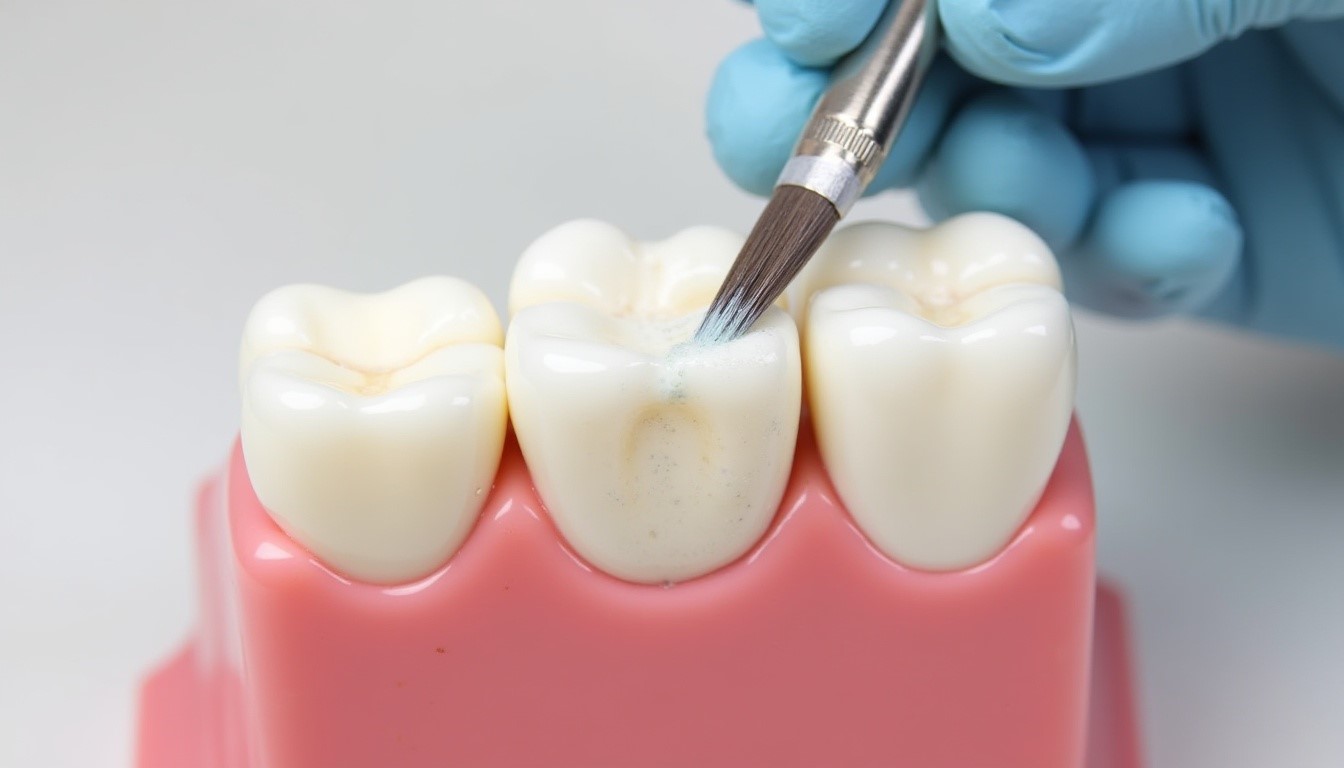
Benefits of fissure sealants
Prevents decay in deep grooves where brushing can’t reach
- Pain-free and needle-free — no drilling required
- Quick application — usually takes just a few minutes per tooth
- Long-lasting protection — can last up to 5–10 years with proper care
- Cost-effective prevention compared to filling cavities later
Who should get fissure sealants?
- Children and teens: Ideal when their adult molars first come through
(usually around ages 6 and 12) - Adults: Suitable for those with deep grooves or a history of decay
- Anyone wanting to reduce their risk of cavities in hard-to-clean back teeth
Your dentist will examine your teeth and let you know if sealants are appropriate.
What to expect after treatment
There’s no downtime. You can eat and drink as normal right away. The sealants are not visible when you smile and don’t affect how your teeth feel or function.
We check your sealants during regular check-ups and reapply them if necessary.
Protect your smile early
There’s no downtime. You can eat and drink as normal right away. The sealants are not visible when you smile and don’t affect how your teeth feel or function.
We check your sealants during regular check-ups and reapply them if necessary.
Ready to take the first step?
prevent decay — especially for kids. Think of them as a long-term shield for your teeth.
Book an appointment today to ask about fissure sealants for you or your child. Prevention really is the best medicine when it comes to your smile.

Frequently Asked Questions
Sealants are typically recommended when a child’s first and second adult molars come through — usually around ages 6 and 12. Applying
them early gives the best chance to prevent decay before it starts.
Sealants can last 5 to 10 years, depending on the patient’s oral habits and how well the teeth are cared for. We check them at every check-up and can easily reapply them if they wear down.
No, applying sealants is completely pain-free. There’s no need for anaesthetic, drilling, or any invasive treatment — it’s simply a matter of cleaning and sealing the tooth surface.
Yes. While most commonly used for children, adults with deep grooves or a high risk of decay can benefit from sealants as well. Your dentist will advise if you’re a good candidate.
Sealants protect the chewing surface of the teeth, but they don’t cover the entire tooth, so good oral hygiene is still essential.
Brushing, flossing, and regular dental visits remain important for keeping your whole mouth healthy.
The Smile Hub
Your Guide to Lasting Oral Health & Beyond
Understanding Tooth Sensitivity: Causes, Treatment, and Prevention
Tooth sensitivity is a common dental issue that affects millions of people [...]
When Is a Root Canal Needed? Understanding the Signs, Causes, and Treatment
Root canal treatment is a dental procedure often misunderstood or feared, but [...]

contact Us
Opening Hours
Mon
8:00 AM - 5:30 PM
Tue
8:00 AM - 5:30 PM
Wed
8:00 AM - 5:30 PM
Thu
8:00 AM - 5:30 PM
Fri
8:00 AM - 5:30 PM
Sat
8:00 AM - 12:30 PM
Sun
Closed
Areas We Service
Five Dock | Rodd Point | Russell Lea | Wareemba | Abbotsford | Canada Bay | Haberfield
©2026 Vivid Dental,