Root canal treatment is a dental procedure often misunderstood or feared, but [...]
Mon 8:00 AM - 5:30 PM
Tue 8:00 AM - 5:30 PM
Wed 8:00 AM - 5:30 PM
Thu 8:00 AM - 5:30 PM
Fri 8:00 AM - 5:30 PM
Sat 8:00 AM - 12:30 PM
Sun Closed
Root Canal Therapy (Endodontics)
Save your natural tooth and relieve pain
If you're experiencing severe tooth pain, sensitivity, or swelling, it may be a sign that the inside of your tooth is infected or inflamed.
Root canal therapy is a safe and highly effective treatment that removes the infection, relieves discomfort, and saves your natural tooth.
What is Root Canal Therapy?
Root canal therapy (also called endodontic treatment) is a procedure used to treat infection or damage inside the tooth. Beneath the enamel and dentin is the pulp, which contains nerves and blood vessels. When
this pulp becomes infected due to deep decay, cracks, or trauma, it can cause intense pain and eventually lead to tooth loss.
During a root canal, we:
- Remove the infected pulp.
- Clean and disinfect the inside of the tooth.
- Fill and seal it.
- Restore it with a crown, if needed, to protect and strengthen the tooth.
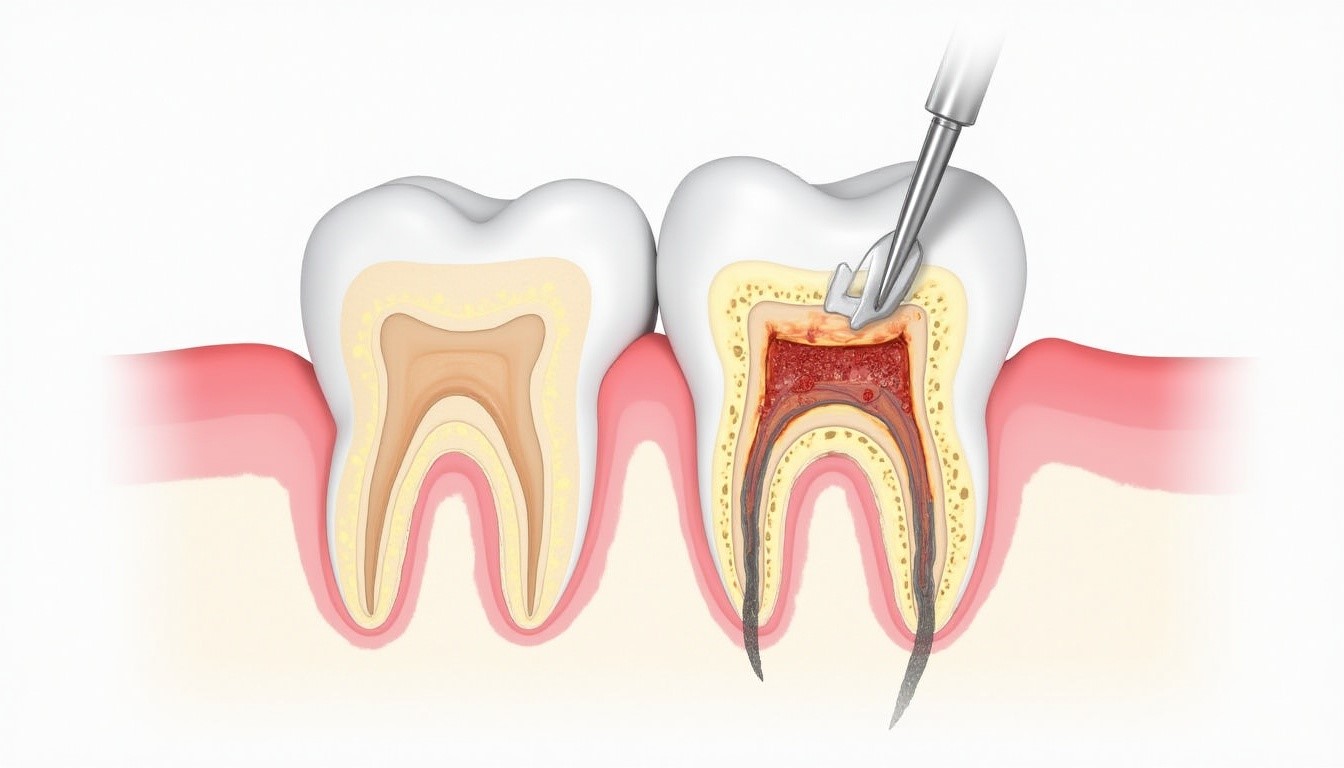
Signs you may need a Root Canal
- Persistent toothache or pressure.
- Sensitivity to hot or cold that lingers.
- Swollen gums near the tooth.
- Darkening or discoloration of the tooth.
- A pimple-like bump on the gums (abscess).
- Pain when chewing or touching the tooth.
Benefits of Root Canal Treatment
- Eliminates pain and infection.
- Saves your natural tooth — no need for extraction.
- Restores full chewing function.
- Prevents spread of infection to other teeth or the jaw.
- Preserves your smile and natural bite alignment.
- Long-lasting solution when followed by proper restoration and care.
What to expect during the procedure
Root canal therapy is typically completed over 1–2 visits:
- Diagnosis & Imaging :We take X-rays to assess the extent of infection and plan the treatment.
- Anaesthesia: Local anaesthetic is used to numb the area completely — most patients say it feels no different from getting a filling.
- Cleaning & Disinfection: A small opening is made, and the infected pulp is carefully removed. The inside of the tooth is cleaned and shaped.
- Filling the Canal: The empty root canals are filled with a biocompatible material to seal them.
- Restoration: The tooth is sealed with a filling or covered with a crown to protect and strengthen it long-term.
Aftercare and recovery
- Mild discomfort or sensitivity for a few days is normal and manageable with over-the-counter pain relief.
- Avoid chewing on the treated tooth until it’s fully restored.
- Maintain regular brushing, flossing, and dental check-ups.
- A permanent crown is usually recommended to prevent future fracture.
Root Canals have come a long way
Thanks to modern techniques and technology, root canal therapy is comfortable, efficient, and highly successful — often relieving pain rather than causing it.
Don’t ignore persistent tooth pain — book a consultation today to get relief and protect your smile.

Frequently Asked Questions
Not at all. With local anaesthetic, the procedure is usually no more uncomfortable than a filling. It actually relieves pain caused by infection or inflammation.
Most root canals are completed in 1–2 appointments, depending on the tooth and complexity of the case.
In most cases, yes — especially for back teeth. A crown protects the tooth from future fractures and restores full function.
With proper care and a good final restoration, a root canal-treated tooth can last a lifetime.
Delaying a root canal can lead to:
· Spread of infection.
· Abscess formation.
· Bone loss.
· Tooth loss.
Timely treatment prevents complications and saves your natural tooth.
Featured blog section
Your Guide to Lasting Oral Health & Beyond

contact Us
Opening Hours
Mon
8:00 AM - 5:30 PM
Tue
8:00 AM - 5:30 PM
Wed
8:00 AM - 5:30 PM
Thu
8:00 AM - 5:30 PM
Fri
8:00 AM - 5:30 PM
Sat
8:00 AM - 12:30 PM
Sun
Closed
Areas We Service
Five Dock | Rodd Point | Russell Lea | Wareemba | Abbotsford | Canada Bay | Haberfield
©2026 Vivid Dental,